A bedbug goes through three kinds of life stage: egg, nymph and adult. Knowing what each one looks like helps you recognise an infestation earlier — and explains why a single treatment is often not enough.
Eggs
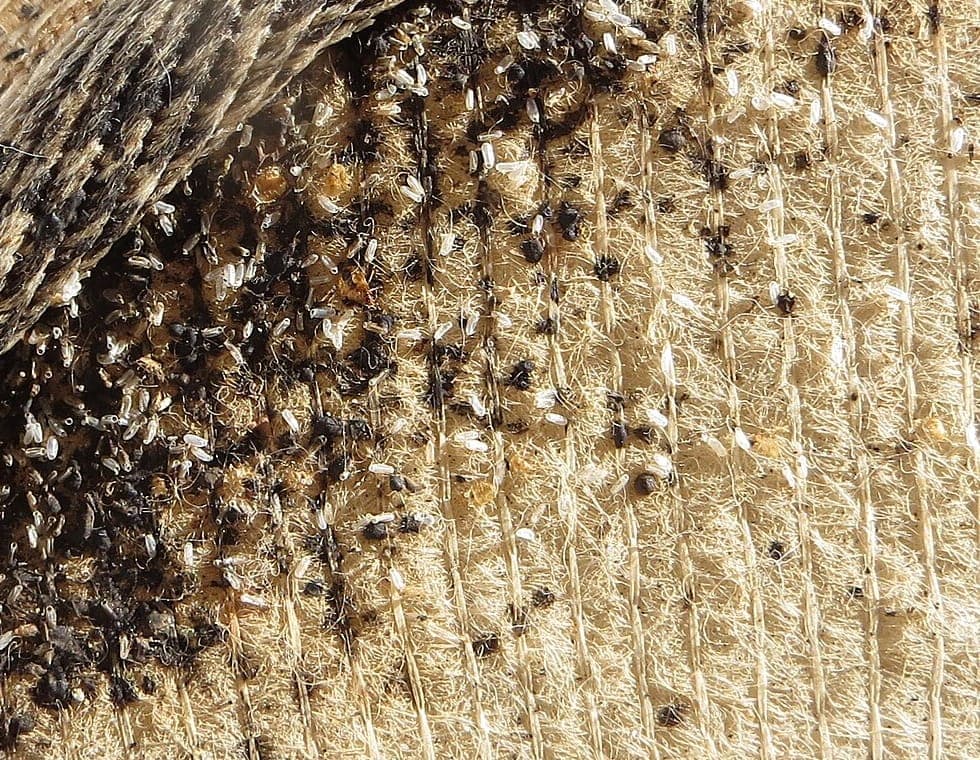
- About 1 mm long, white or pearly, slightly curved.
- Laid singly or in small clusters, glued to rough surfaces in seams, joints and cracks.
- Very hard to see without a torch; easier to spot on dark wood than on a pale mattress.
A female lays eggs continuously through her adult life, a few at a time. At typical indoor temperatures eggs usually hatch in about one to two weeks; warmer conditions speed this up.
Eggs are the hardest stage to kill. Their shell protects them from many treatments that work well against active bugs, which is the main reason bedbug control is planned in more than one visit.
Nymphs
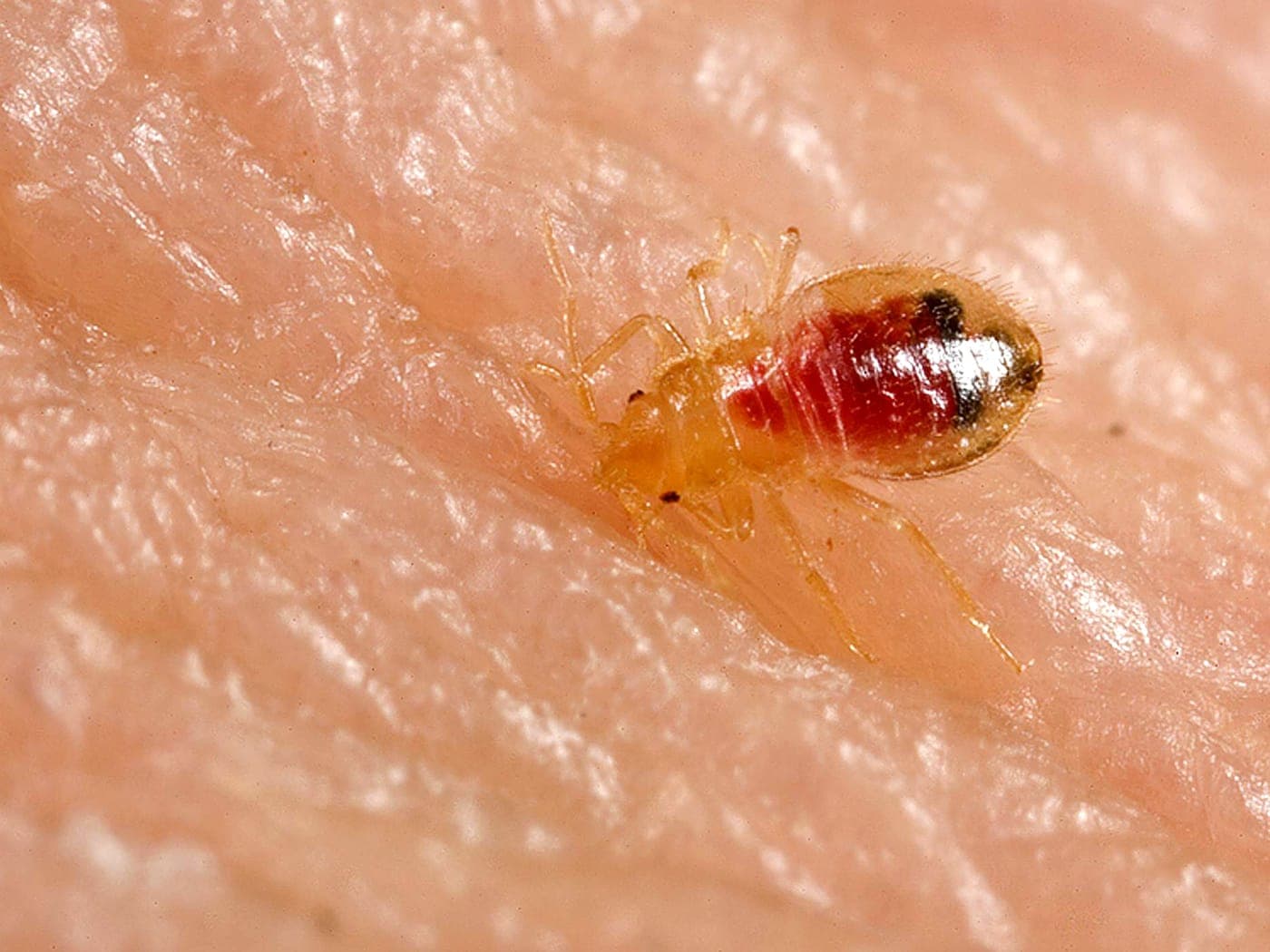
Newly hatched nymphs are about the size of a pinhead and almost colourless, which makes them very difficult to see on a mattress. After feeding they show a bright red abdomen, like the nymph in the photograph on this page.
A nymph moults five times before becoming an adult, and it needs a blood meal before each moult. Each moult leaves behind a pale, empty skin — one of the most useful signs of an established infestation.
Adults
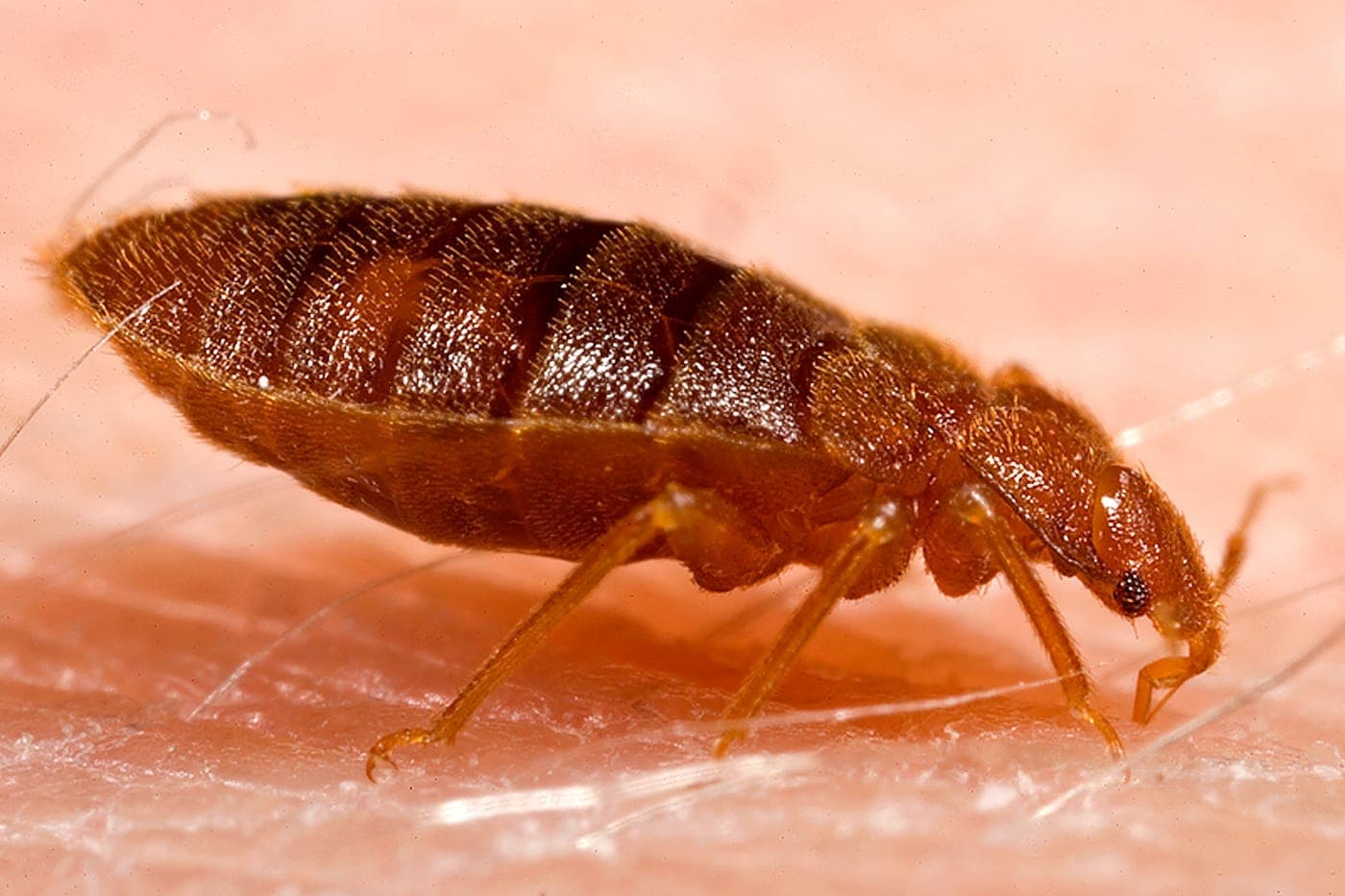
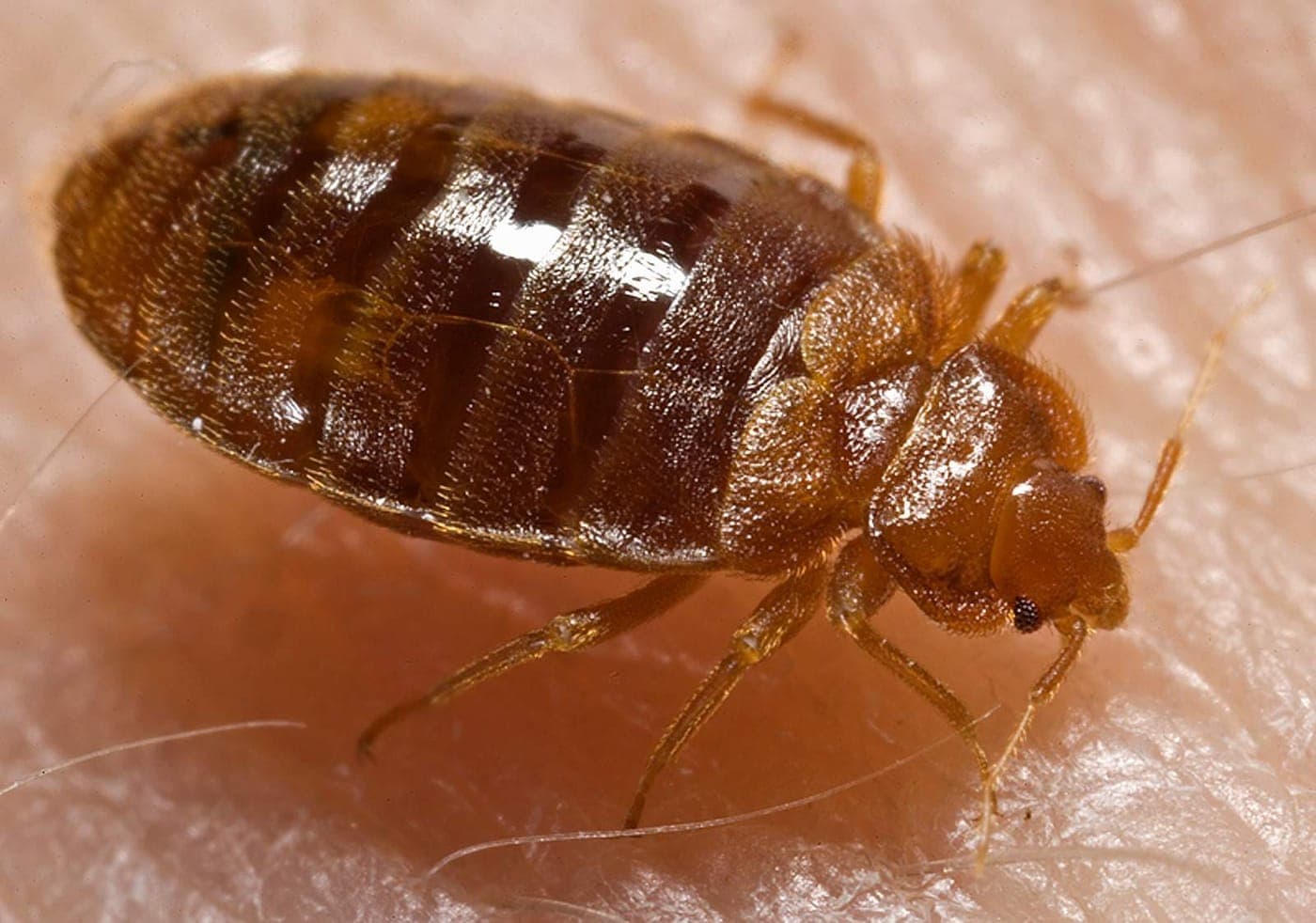
Adults are about 5 mm long, flat and oval when unfed, and reddish-brown. After feeding they become swollen, longer and darker. They have short antennae and visible bands across the abdomen. They do not have functional wings and cannot fly or jump.
How long the life cycle takes
The time from egg to adult depends on temperature and how easily bedbugs can feed. In warm homes with someone sleeping nearby, it can be a matter of weeks. Adults can live for months, and can survive extended periods without feeding.
The practical result is that, at any moment, an infested room contains a mix of eggs, nymphs and adults.
Why this matters for treatment
Because eggs are hard to kill, some will usually survive a first treatment and hatch afterwards. If nothing happens next, the young nymphs feed, grow and eventually lay eggs themselves.
That is the reason our core service is a two-treatment programme, with the second treatment six days after the first. The second visit targets bugs that survived and nymphs that have hatched in the meantime, before they have time to mature and lay eggs of their own. The interval is confirmed against the treatment method and the product labels used for your property.
What to do if you find any life stage
Finding even a single egg cluster or shed skin is worth acting on. Read our guide to identifying bedbugs in your mattress and bedroom, and if the evidence is confirmed, request a quotation for professional treatment.